The Quiet Courtesy of Waiting for the Deal
Waiting for the deal keeps a shared card game orderly: learn when to hold back, where to keep your hands, and how to follow the table’s pace.

The most common mistake in a shared card game is reaching for a card before the dealer has finished the deal. It can interrupt the next player’s attention, blur whose turn it is, and make a simple round feel hurried. Waiting for the deal is a small courtesy with a practical effect: everyone can see what is happening and take a turn in order.
Waiting for the deal keeps the sequence visible
A deal is not just the delivery of cards. It establishes a sequence that players can follow: cards go out, the dealer completes the action, and the table moves to the next decision. Holding back until the deal is complete lets that sequence remain clear.
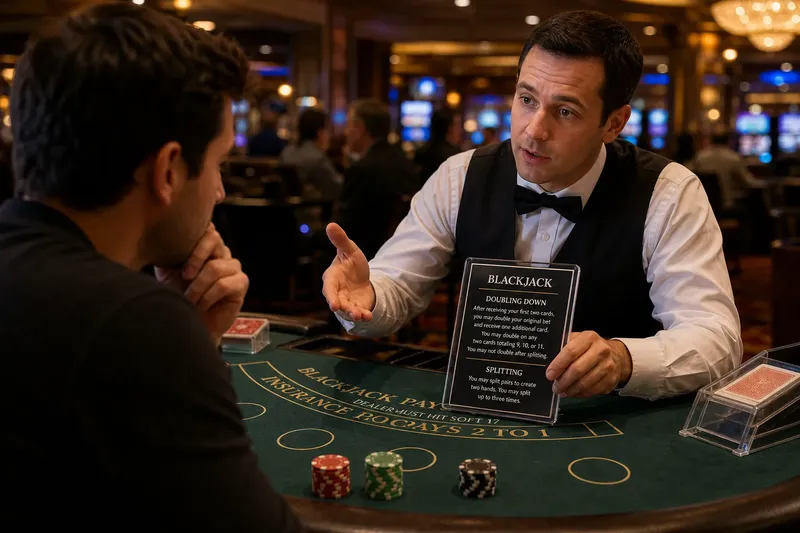
At a casino table, the dealer manages the cards and the pace of play. In a home game, the person dealing may be a player who also needs to watch the order. In either setting, reaching early can distract the dealer or another player just as they are tracking the action.
Waiting does not require silence or a rigid pose. It means keeping attention on the table and allowing the current action to finish before beginning the next one. A brief pause can make the order easier to read without slowing the game in any meaningful way.
Signals help players recognize the handoff
Players often rely on simple visual cues. The dealer may finish distributing cards and withdraw their hands; a player may then look at their cards or make the appropriate decision. In games where players act in turn, the person whose turn comes next may be able to tell from the sequence and the dealer’s attention.
These cues are not universal rules. A casino, a particular game, or a casual group may use different procedures. The useful habit is to observe what the table is doing before acting, rather than assuming that one familiar signal applies everywhere.
Keep your own hands still while cards are being dealt. Avoid reaching across the layout, touching cards that are not yours, or moving objects into the dealer’s working space. At home, the same consideration applies to a crowded kitchen table: leave room for the person dealing to place cards and for others to see them.
Attention matters more than speed
A smooth table is not necessarily a fast one. Players need time to notice the action, understand when they are involved, and make a decision without being crowded by someone else’s movement. Waiting gives attention a chance to catch up with the cards.
That pause also helps prevent avoidable confusion. If a player looks away, speaks to someone nearby, or handles cards before the deal is complete, they may miss a cue. A moment of focused attention can spare the table from stopping to establish what has already happened.
Say you are at a small home table where the dealer is passing cards clockwise and a conversation briefly pulls your attention away. Rather than reaching when you notice a card near you, wait for the dealer to finish and look up. The expected result is a clearer handoff: you can tell that the deal is complete, and the dealer can continue without having to pause to clarify your movement.
What should you do when the timing is unclear?
When is it your turn to act?
Follow the order already in use and watch for the dealer or the other players to direct attention to you. If the cue is not clear, ask briefly before reaching or acting.
Should you touch your cards as they arrive?
Wait until the deal is complete and the table’s procedure makes clear that you may handle them. Some games have specific rules about when or how cards are viewed, so follow the posted rules or the dealer’s direction.
What if another player moves early?
Give the dealer a moment to manage the interruption rather than correcting the player across the table. If the action affects whose turn it is, a quiet question to the dealer can help restore the sequence without adding pressure.
How should a newcomer learn a table’s rhythm?
Watch one round before acting, and ask the dealer or host about an unfamiliar procedure. A short question is usually easier for everyone than guessing and creating a pause later.
Different tables can have different customs
Formal casino play and informal card games share the value of taking turns, but their procedures are not interchangeable. A casino dealer may manage a particular layout and game rules, while a home host may use a simpler routine. Even among familiar games, dealing and card-handling customs can vary.
When instructions are posted or a dealer gives a direction, use those as the guide. For a home game, the host can explain the group’s preferred sequence before cards are distributed. That is especially helpful when guests know different versions of the same game.
The point is not to enforce one universal posture or silence. Some tables are lively; others are quiet. The shared courtesy is to let the person currently dealing or acting complete the visible part of the turn before taking the next action.
A small pause can protect the table’s ease
Waiting for the deal is a modest habit, but it carries useful information: the current action is still underway, and the next one can wait until its place in the sequence arrives. Watch the dealer, keep your hands clear, and ask when the cue is uncertain.
That is the quiet courtesy of waiting for the deal. It respects the people sharing the game and makes the order easier to follow, whether the table is a casino layout or a few chairs gathered around a kitchen table. The best signal is often simple: let the cards arrive, notice when the deal is finished, and then take your turn.